Ask TeaNa
The Leaf and the Water
The leaf carries the story.
The water brings it forward.
Heat the water
Meet the leaf
Let them come together
Give it time
Receive what unfolds
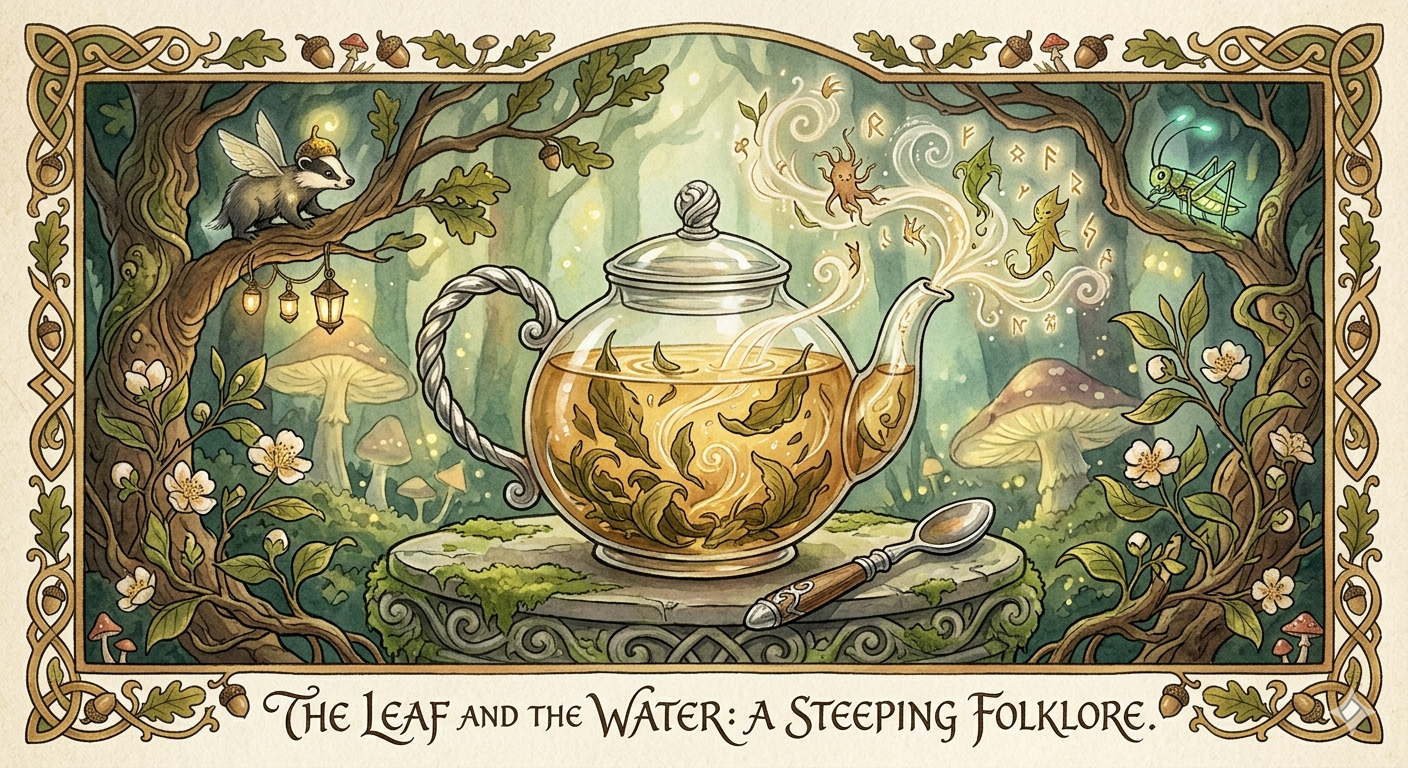
Before the first sip, there is a quiet alchemy where the dry leaf remembers the forest and the water carries the heat of the sun. To steep is to wake a sleeping story, one drop at a time.

Loose-Leaf vs. Tea Bags: Why the Leaf Matters
Full Flavor & Aroma: Loose-leaf tea preserves the whole leaf, giving you richer, more nuanced flavors than teabags filled with dust and fragments.
Pure & Natural: Our teas are carefully sourced without hidden plastics or chemical adhesives - just exceptional leaves.
Customizable Braw: Loose-Leaf lets you control strength, temperature, and steep time for the perfect cup every time.
A Ritural, Not Just a Drink: Brewing loose-leaf tea turns a simple cup into a mindful, sensory experience.
Tip: Use 1 tsp per cup, steep according to the tea type, enjoy the depth of flavor only loose-leaf can offer.
Before you brew, take a moment to know your tea. Identifying its family, origin, and herbal blends ensures you choose the correct water temperature and steeping time ~ for a flawless cup.
Steep into the Ritual
Warm your water-let it come alive, not rushed
Add your leaves- whole, open, breathing
Poor Slowly- this is where it begins
Wait- let the leaves tell the story
Sip gently- notice what rises
The Alchemy of Water
To honor the leaf, you must first respect the elements that carries it. Since your tea is over 98% water, the quality of the source is the foundation of every flavor.
The Source: Seek Purity
The Ideal: Fresh spring water or filtered water. These provide a clean, neutral canvas that allows the deliciated botanicals and tea minerals to shine.
The Avoidance: Avoid straight tap water (which contains chlorine) or distill water (is too flat and lacks minerals to draw out tea character).
The Breath: Don’t Overboil
Oxygen Matters: Water needs dissolved oxygen to “brighten” the tea. If you re-boil the same water over and over, it becomes “stale” and can make your tea taste dull.
The Watchful Eye: Watch for the “Fish Eyes” ~ the tiny bubbles that form just before a rolling boil. For green and white teas, this is often the perfect moment to pour.
Tip: No matter which method you steep, always remember that water temperature is your secret key.
Tea Family The Brew
White tea 3-4 minutes, 160°F-180°F
Green tea 1-2 minutes, 160°F-180°F
Yellow tea 2-3 minutes, 160°F- 175°F
Oolong tea 2-5 minutes, 180°F-200°F
Black tea 3-5 minutes, 190°F-212°F
Pu-erh, Dark tea 2-5 minutes, 200°F-212°F
The Two Paths of the Leaf
The Western Path (The Long Steep)
This is the “comfort” method, common in Europe and the Americas. It is designed for a single, hearty cup or a large pot to share.
The Ratio: A small amount of leaf (about 1 teaspoon) in a large amount of water (8oz).
The Time: A single, long infusion lasting 3 to 5 minutes.
The Vibe: Consistent, full-bodies, and straightforward. Once steeped, the leaves have usually given their all.
The Eastern Path (Gongfu Cha)
This is the “ritual” method, common in China and Taiwan. The name Gongfu literally means “making tea with skill.”
The Ratio: A large amount of leaf packed into a very small vessel (like a Gaiwan or Yixing pot).
The Time: A series of very short “flash” infusions, often starting at just 10 to 30 seconds.
The Vibe: Evolving and nuanced. You steep the same leaves 5, 10, or even 15 times, watching the flavor change and “bloom” with every pour.
How to Store Tea:
Keep it cool.
Keep it dark.
Keep it dry.
Keep it sealed.
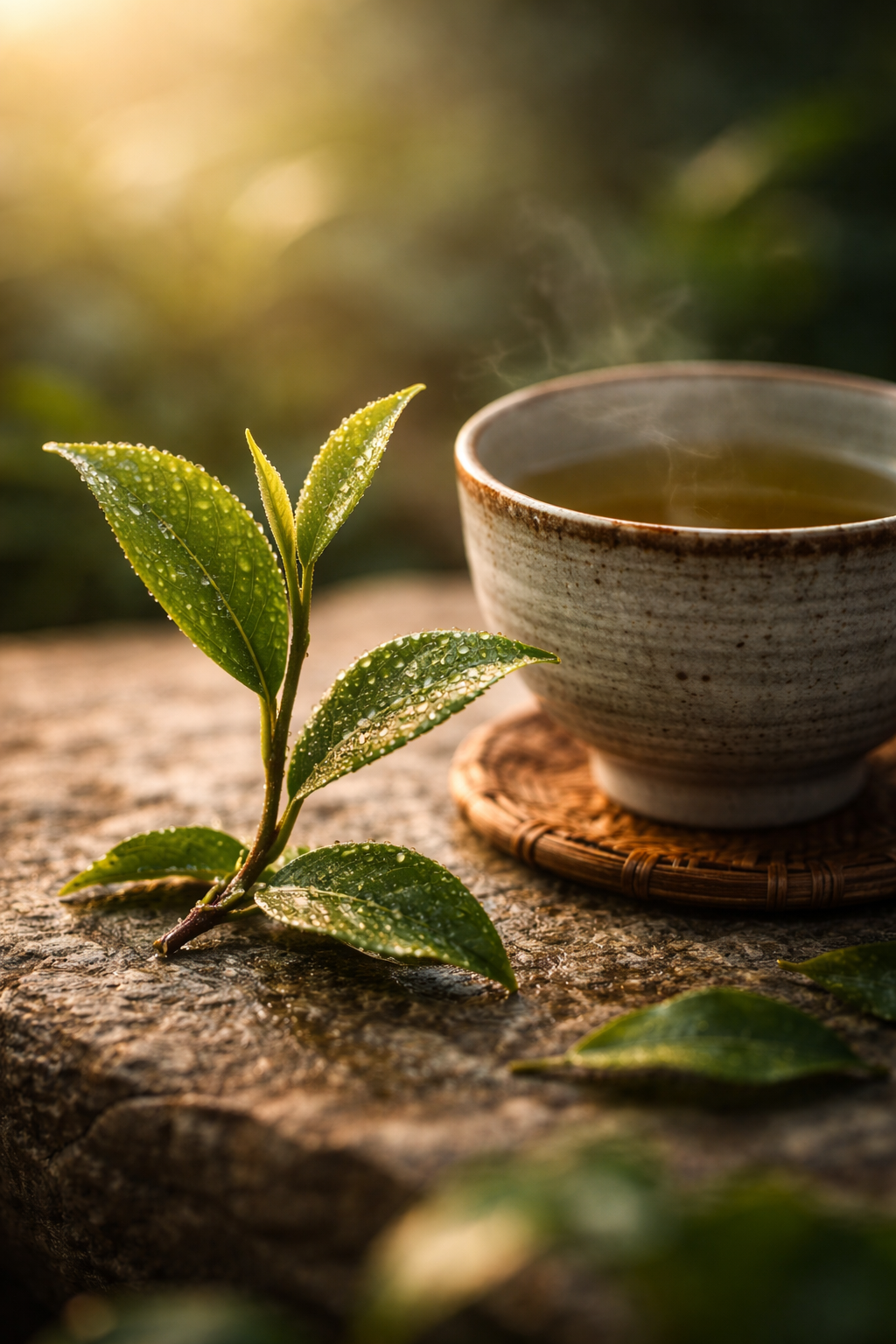
Tip: Definitely don’t squeeze the tea bag when it’s done steeping. This will only release unwanted extra tannins.
The Gatherings: Ritual of Connection
Parties & Ceremonies
Tea ceremonies are the intentional architecture of a moment, designed to pull us out of the “Statis” and into a shared stillness. Across the globe, these rituals vary by geography but remain identical in spirit. From the rhythmic elegance of the Japanese Chanoyu - a Zen-based meditation on harmony and purity- to the vibrant Gongfu tea tradition of China, where small vessels are used to “study” the leaf’s evolving layers, the ceremony is a tool for presence. In Korea, the Darye ceremony focuses on a refine ease and the natural “way of tea”, while the Maghrehi tradition of North Africa transforms mint tea into a bold, frothy symbol of hospitality and community. Even the English Afternoon Tea, born from a 19th-century desire to bridge the long gap between meals, created a sophisticated social environment that remains a global standard for elegance and conversation.
For me, the most authentic ceremony doesn’t require a palace or a scroll; it requires only the “Tin” spirit of the host. My own path began in a Treehouse, where the simplicity of a small space and a shared cup taught me that a tea party is a sanctuary. Whether you are following the centuries-old paths of the East or designing a whimsical garden gathering for friends, you are participating in an ancient human hand-off. At TeaNa Botanica, we believe every ceremony is a “Grain of Sand” ~ a small, deliberate act of beauty that helps rebuild the connection between the mind, the body, and the kindred spirits around us.

Glossary of the Innerflo
The Industry Standards
Terroir: (Pronounced ter-wahr) The unique “soul” of the land. It is the combination of soil, climate, and altitude that gives a leaf its specific personality.
Liquor: The actual liquid resulting from the brewing process (not to be confused with spirits!). We study the color and clarity of the liquor to judge the tea’s quality.
Infusion: The process of steeping the leaves in water. At TeaNa, we often call this the “Awakening.”
Oxidation: The natural process that occurs after a leaf is picked. It is what determines if a tea becomes Green (unoxidized), Oolong (partially oxidized), or Black (fully oxidized).
Astringency: The dry, puckering sensation on the tongue (like a tart apple). When balanced, it provided “structure” and “power” in a cup.
Cultivar: A specific “variety” of the tea plant that has been nurtured for its unique flavor profile- much like the different types of roses in a garden.
Agony of the Leaves: The traditional term for the unfurling and “dancing” of died tea leaves as they rehydrate in hot water. It is the dramatic transition from dormancy of life ~ the exact moment the ‘mi’ (the heartbeat) of the tea is awakened.
The TeaNa Lexicon
Innerflo: The state of effortless connection between the mind, body, and soul. It is the quiet “flow” we seek when we sit with a cup of tea.
The In-Between: The Liminal Space where the world gets quiet and intuition speaks. It is the “stillness” found between the first sip and the last.
Long Leaf: A nod to the Long family lineage and the high-quality tea that preserves the plant’s original energy.
Botanical Suit: The protective, vibrant “uniform” of nature, representing the health and vibrance we put into our bodies.
The Echo: The Lingering finish of a tea - the way a flavor (or a memory) stays with you long after the cup is empty.
Ozmi: (Noun/State of Being) The personification of Our Zen Magical Innerflo. Derived from the strength of the Long lineage (The Dragon) and the stillness of the mountain, Ozmi represents the moment when out high-frequency sensitivity stops being a “noise” and becomes a “superpower". To “find your Ozmi” is to find the calm center within a chaotic room. Oz ~'mi’.
‘mi’: (The Heartbeat) The singular, steady pulse of life that persists beneath the noise. In the garden, it is the sap rising; in the body, it is the breath; in the tea, it is the first drop of water hitting the leaf. mi is the reminder that even when the “filter” breaks, the core rhythm of our being remains unbroken. It is the smallest grain of sand that holds the entire beach together.
The Botanical Cloud:
Infused Lavender & Earl Grey Shortbread
A delicate, melt-in-your-mouth tribute to the afternoon tea ritual.
Traditional shortbread is a canvas, but when infused with the essence of bergamot and dried lavender, it becomes a transportive experience. By “blooming” our TeaNa Tea in warm butter before baking, we draw out the deep citrus and floral oils, ensuring every bite is consistently aromatic.
The Ritual
The Butter Infusion: In a small saucepan over low heat, melt the butter. Once melte, stir in 2 tablespoons of Noble Pearl. Let it simmer on the lowest setting for 5 minutes - do not let the butter brown. Remove from heat and let it steep for another 20 minutes.
The Chill: Strain the butter through a fine-mesh sieve into a bowl, pressing the leaves to extract every drop of flavor. Discard the leaves. Place the butter in the fridge until it is firm again (but still soft enough to cream).
The Finishing Touch: Stir in the remaining 1 tablespoon of dry Noble Pearl (un-fround) for beautiful visual flecks throughout the cookies.
The Bake: Roll the dough into a log, wrap in parchment, and chill for 30 minutes. (even chilling overnight is Ozmi), Preheat your oven to 170°C (325°F). Slice the log into 1/2-inch thick rounds and place on a baking sheet.
The Reveal: Bake for 12- 15 minutes. They should remain pale, only just beginning to turn golden at the very bottom. While warm, sprinkle with a little granulated Sugar.
The Ingredients
3 tbsp of Noble Pearl
1 cup (225g) high-quality unsalted butter
½ cup powdered sugar (for that “cloud” texture)
2 cups all-purpose flour
½ tsp vanilla bean paste (or extract)
A pinch of fine sea salt
Optional: Granulated sugar & a few extra pinches of Anica Botanica for dusting.
Anica- Tip: For a truly whimsical look, press a single small, edible Anica Botanica pressed flower into the center of each cookie before baking.

Anica Aura Collection

Our Nobel Pearl Blend, which is part of the Anica Aura Collection, is designed with high-grade oil of bergamot and culinary-grade lavender. While many store-bought teas use artificial flavoring that can turn “soapy” when baked, our organic botanicals remain their integrity, offering a clean, sophisticated finish that pairs perfectly with a fresh cup of the very same Nobel Pearl tea.
The Leaf and the Water: The Call-to-Action
When you bring the leaf and the water together, you are not just making tea; you are conducting a silent symphony of temperature, time, and intention. You are the architect of your own stillness.
The ritual has many layers, and the deepest secrets are found in the subtle shifts of the steep. Become a member of the TeaNa Circles to receive “Letters from the Garden”- an in-depth journey into the sacred geometry of the brew, the alchemy of the water, and the quiet mastery of the ‘In-between.’ If you like the receipt and want more subscribe to The TeaNa Golden Circle.
TAP to Discover the TeaNa Golden Circle to Subscribe