Ask TeaNa
A Cupful of Tea
History & Health
The Global Journey of Tea: From Myth to Mug
Tea is more than just a beverage; it is a cultural cornerstone that has fueled revolution, inspired art, and shaped the economies of entire nations. Today, it stands as the most consumed drink on Earth after water, with over 5 billion cups enjoyed daily.

The Lineage of the Leaf: A Timeline of Tea
The Era of Discovery (Ancient Roots)
2737 BC: The Divine Accident: Emperor Shen Nong, the “Father of Chinese Medine,” discovers tea when wild leaves from a Camellia sinensis tree drift into his boiling water.
350 AD: The first written mention of tea as a medicinal drink appears in a Chinese dictionary. At this time, it was often pressed into “bricks” and used as currency.
600s-900s AD (Tang Dynasty): Tea moves from medicine to an art form. The “Tea Classic” is written by Lu Yu, defining the first formal rules for brewing and tasting.

The Spiritual Expansion
(The Monk’s Path)
805 AD: Buddhist monks carry tea seeds from China to Japan.
1191 AD: The monk Eisai brings the Zen philosophy of tea to Japan, eventually leading to the creation of the Matcha ceremony (Chanoyu).
The Global Shift (Empires & Oceans)
1606: The Dutch East India Company brings the first large shipment of tea to Europe. Sold in luxury apothecaries.
1662: Queen Catherine of Braganza, a Portuguese princess, marries King Charles II of England. Her personal love for tea makes it “fashionable” drink of the British Royal Court.
The Industrial & Modern Era
1840s: Afternoon Tea is Born. Anna, the 7th Duchess of Bedford, complains of a “sinking feeling” in the late afternoon. She begins the ritual of tea and light snacks - a tradition that eventually defined British culture.
1904: The Iced Tea Accident. At the World’s Fair in St. Louis, a merchant realizes it is too hat for hot tea and pours it over ice. This moment changed the American palate and tea culture forever.
2020s - Present: The Great Rediscovery. As the world moves away from sugary “pops” and high-caffeine crashes, tea returns to its roots as a tool for health, focus, and intentional healing.
2026: TeaNa Botanica is Founded. After a journey through TBI recovery and a lifetime of botanical study, Tina Long opens the doors to a new era of tea- blending ancient wisdom with modern recovery in Decatur, Illinois. TeaNa Long Leaf Teas

The Tea Toppled Empires
Tea’s value was once as high it was used as currency, and that value eventually led to some of the most famous conflicts in history.
The Boston Tea Party (1773)
In the American colonies, tea became a symbol of ‘taxation without representation.’ When the British East India Company tried to monopolize the trade, colonists famously dumped 342 chests of tea into Boston Harbor. This single act of defiance was a primary spark for the American Revolutionary War.
The Opium Wars
In the 19th century, Britain’s insatiable thirst for tea led to a massive trade deficit with China. To balance the scales, the British began smuggling opium into China, leading to two devastating wars. These conflicts shifted the global balance of power and changed the history of East Asia forever.
The Rise of India and Sri Lanka
To break China’s monopoly, the British “smuggled” tea seeds and knowledge into India (Assam and Darjeeling) and later Sri Lanka. This turned these regions into the global tea powerhouses they are today.

The “Great Divide”
Coffee vs. Tea in the U.S.
It is an interesting irony that while the rest of the world turns to the kettle, the United Stated remains a nation of the percolator and the soda fountain.
Why the U.S. is BEHIND
A Rebel’s Grudge: After the Boston Tea Party, drinking tea was seen as “unpatriotic” in America. Coffee became the “revolutionary” drink of choice, a habit that stuck for centuries.
The Rise of “Big Soda”: In the 20th century, the U’S’ led the world in the mass production of carbonated soft drinks. The convenience of a cold, sugary can often overshadowed the ritual of a brewed pot.
The Modern Awakening
While the U.S. has historically focused on the quick energy of coffee or the sweetness of pop, a shift is happening. Americans are beginning to rediscover the “Wisdom of the Leaf”.
Health over Haste: People are moving away from the “crash” of high-sugar drinks towards the antioxidants (polyphenols) and steady focus provided by tea.
Mindfulness: Unlike a coffee to-go, tea often required a moment of patience- steeping, cooling, and sipping. It’s a natural antidote to the high-stress, fast-paced American lifestyle.
“Our Business was born from the idea that tea is more than a commodity- it’s a return to balance. While the world around us moves faster and faster, we invite you to step away from the “pop and coffee” culture and rediscover the ancient wisdom that has sustained civilizations for thousands of years. We aren’t just selling tea; we are bringing a global legacy to your cup.” ~Tin
The Alchemy of the Leaf
~ Why Tea is a Divine Herb
Core Benefits to Highlight:
The Antioxidant Shield
The Calm Alertness (L-Theanine)
The Botanical Boost
“Tea is a divine herb. It grows in the mist of the mountains and drinks the dew of the stars.”
~ Inspired by Okakura Kakuzó
Caffeine
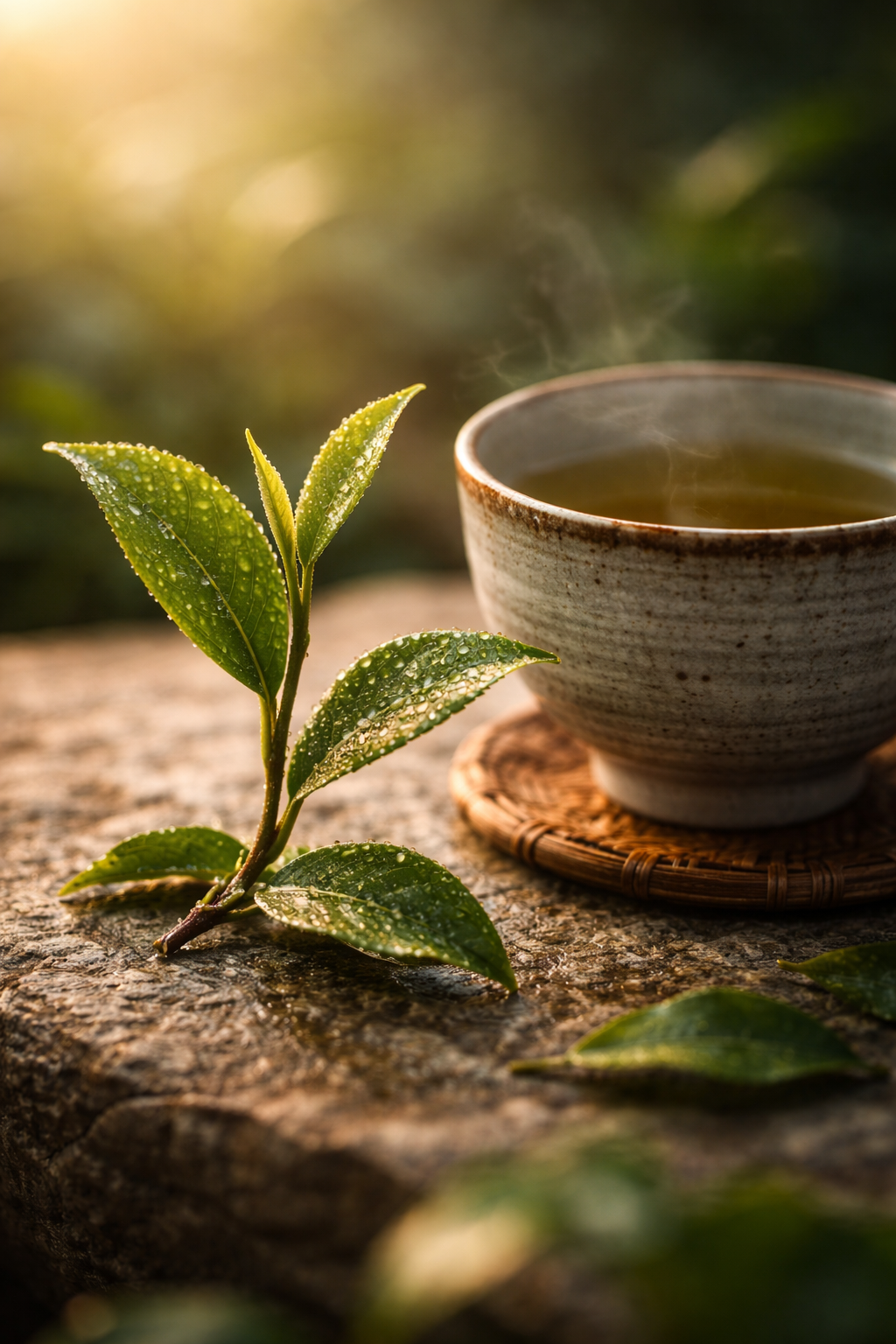
An average cup of coffee has 95 milligrams of caffeine, which give is that instant jolt of energy. Tea has less caffeine than coffee and even bigger benefits of amino acids called theanine. Theanine slows down the absorption of caffeine ~ releasing the caffeine in a tea slowly and helping us feel the Ozmi effect, where the “static” of the world fades and your own internal voice returns that is more sustained level of awareness than what coffee provides.
Tea Family Caffeine Content per 8 oz.
White tea 15-30 mg
Green tea 35-45 mg
Yellow tea 33 mg
Oolong tea 37-55 mg
Black tea 40-70 mg
Dark tea 60-70 mg
Tea for the Mind: Neurological Wisdom’
Tea contains a unique “chemical harmony” that specifically targets the brain and nervous system, which is why it is so effective for recovery and or management:
The L-Theanine & Caffeine Synergy: Unlike the “Spike and crash” of coffee, tea contains L-Theanine, an amino acid that crosses the blood-brain barrier. It promotes Alpha brain wave activity, which is associated with “relaxed alertness.” For those of us dealing with brain fog, it provides a gentle bridge back to focus.
Neuroprotection: The polyphenols in Camellia sinensis are being studied for their ability to protect neurons and reduce inflammation in the brain - a crucial factor in long-term neurological health.
Calming the Nervous System: Tea helps regulate cortisol (the stress hormone). When the nervous system is overstimulated or healing from trauma, the ritual of steeping and sipping acts as a “grounding” exercise, signaling to the body that it is safe to rest.
Managing Headaches: Many traditional practitioners use the gentle, natural caffeine in tea to help constrict swollen blood vessels that cause headaches, providing relief without the harshness of synthetic stimulants.
The Seven Resonances: A Journey to Stillness
“Choose the resonance your body craves today.”
At TeanNa Botanica, we believe tea is an invitation to harmonize. Whether you are navigating the “Over-loud” world of TBI and FND or simply seeking a moment of grace, use this guide to find your path.
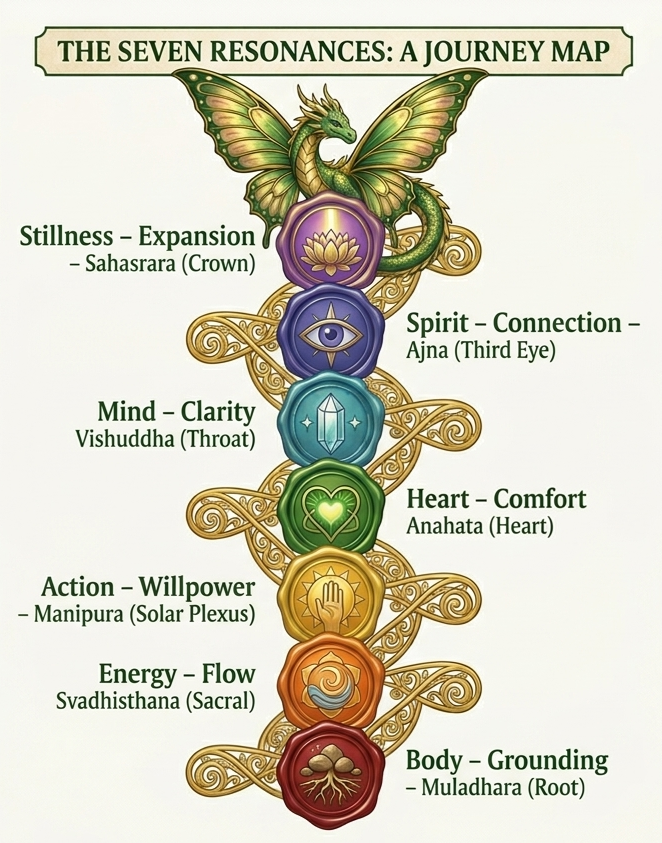
Stillness-Expansion (The Crown)
Goal: To quiet the mind and open the spirit.
The Blend: High-mountain White Teas, Silver Needle or Milou Utopian Collection.
When to Steep: During morning meditation or when you need to feel “unbound” from daily stress.
Spirt - Connection (The Third Eye)
Goal: To Heighten intuition and mental clarity.
The Blend: Pure Jasmine Pearls or Blue Lotus infusions.
When to Steep: When the “fog” rolls in and you need to see the “Leafy Echoes” of your own wisdom.
Truth - Expression (The Throat)
Goal: Clear communication and honest reflection.
The Blend: Peppermint, Eucalyptus, or cooling Green Teas.
When to Steep: Before an important conversation or when you feel “stuck” in your own story.
Harmoney- Compassion (The Heart)
Goal: Emotional balance and self-love.
The Blend: Rose-infused Oolongs, delicate Floral Botanicals of Anica Aura Collection.
When to Steep: When the heart feels heavy or you need the “Elegant Echo” of Anica Divine.
Vitality - Power (The Solar Plexus)
Goal: Sustained energy and confidence.
The Blend: Roasted Oolongs, Ginger spiced Black Teas, or Ozmi Infusio Collection.
When to Steep: When you need the “Dragon’s Breath” of Ozmi to power through the day.
Flow- Creativity (The Sacral)
Goal: To ignite the imagination and sensory joy.
The Blend: Vibrant Citrus blends or Fruity Tisanes.
When to Steep: When you are writing, gardening, or creating your own “Fairytale Surrealism.”
Grounding- The Root (The Base)
Goal: Safety, stability, and nervous system support.
The Blend: Earthy Pu-eh, Dark Teas, or Tilia Liminal Collection.
When to Steep: When the world feels “too much” and you need to “Enter the Key” back to your own center.
“As a survivor of TBI, I developed these resonances to help me navigate the world with intention. I hope they provide you with the same sanctuary they give me.” ~ Tina ‘Tin’ Long
Tap to Shop TeaNa Teas
The Founder’s Journey” From Performance to Healing
For years, I moved through the world at a marathon pace. As a long-distance runner, my relationship with health was about performance - taking supplements and vitamins to push my body further and faster. I was on the “upper side of health,” always looking for the next boost.
Then, everything changed. After a Traumatic Brain Injury (TBI), I was no longer running for performance; I was fighting for focus. I faced the heavy clouds of brain fog, a fractured sense of concentration, and a nervous system that felt constantly “on edge.”
The irony was that I already held the knowledge of herbs and botanicals from my years as a horticulturist. But in the midst of injury, I had to rediscover tea not as a hobby, but as a lifeline. Applying what I knew to my own healing process was the spark that created TeaNa Botanica Boutique.
The Professional Prescription
It isn’t folklore; professional in the holistic and medical fields have long recognized these benefits.
Acupuncturists & Herbalist: In Traditional Chinese Medicine (TCM), tea is often the first “Prescription.” It is used to balance the body’s Qi (energy) and clear the “heat” that can cause inflammation and headaches.
Integrative Neurologists: More professionals are now recommending high-quality loose-leaf tea as part of a “brain-healthy” diet to support cognitive longevity and recovery.
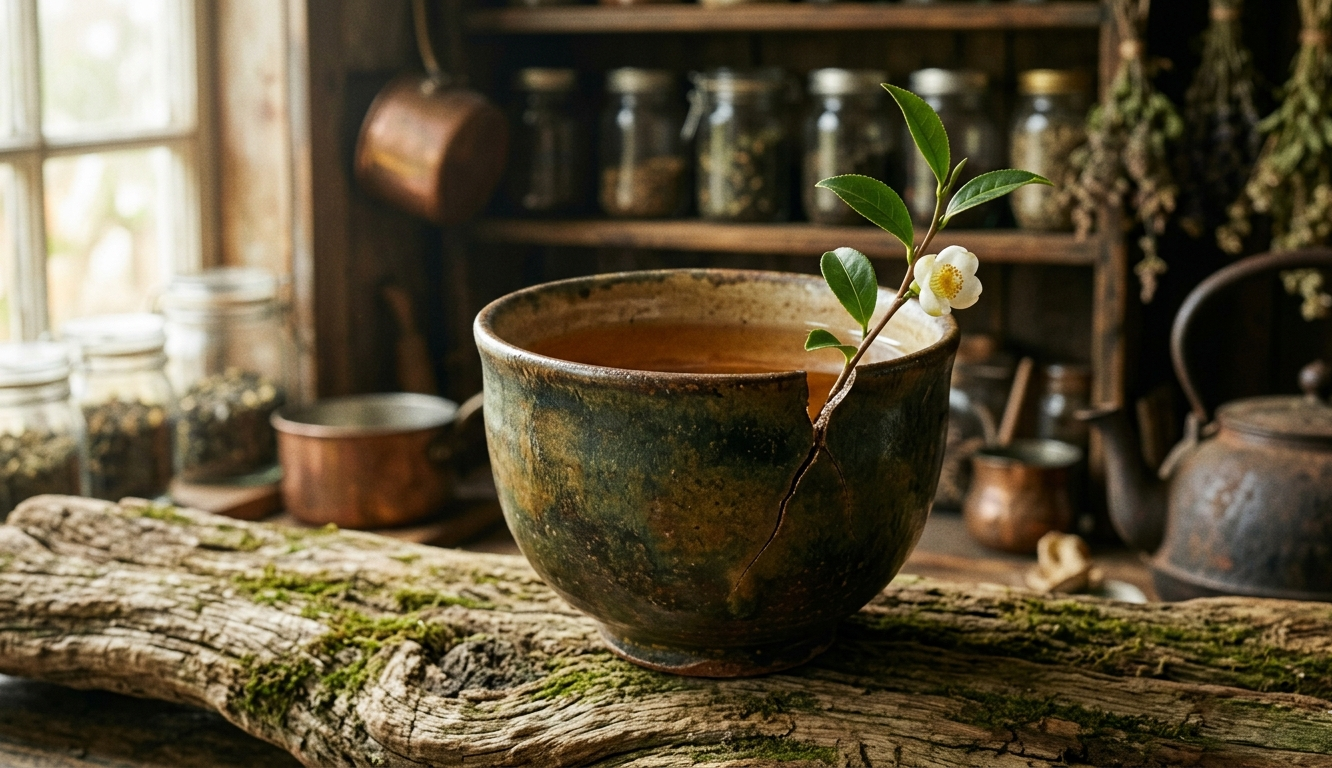
Why “TeaNa” is Different
“When I curate our blends, I’m not just looking for a pleasant flavor. I am looking for the same relief I need during my own continuing recovery. I am looking for the clarity I seek when the fog is thickest. We are moving away from the “pop and coffee” culture of instant gratification and moving towards a culture of intentional healing.” ~Tin
A Cupful of Tea: The Call-to-Action
The history of tea is the history of human awaking. From the silent meditations of Zen monks to the grand porcelain parlors of the Victorian era, tea has been the silent partner in our greatest moments of clarity. It is a restorative alchemy for the modern nervous system, a gentle constrictor of shadows, and a quiet protector of the mind’s inner architecture.
Become a member of the TeaNa Circles to receive ‘Letters from the Garden’- an in-depth journey into the sacred geometry of the brew, the historical echoes of the trade, and the quiet mastery of the in-between. Here, we don’t just study the past, we brew it into a future of intentional healing.
Tap to Subscribe